Search the entire website

GPLRC Search Center

GPLRC
PAST Projects

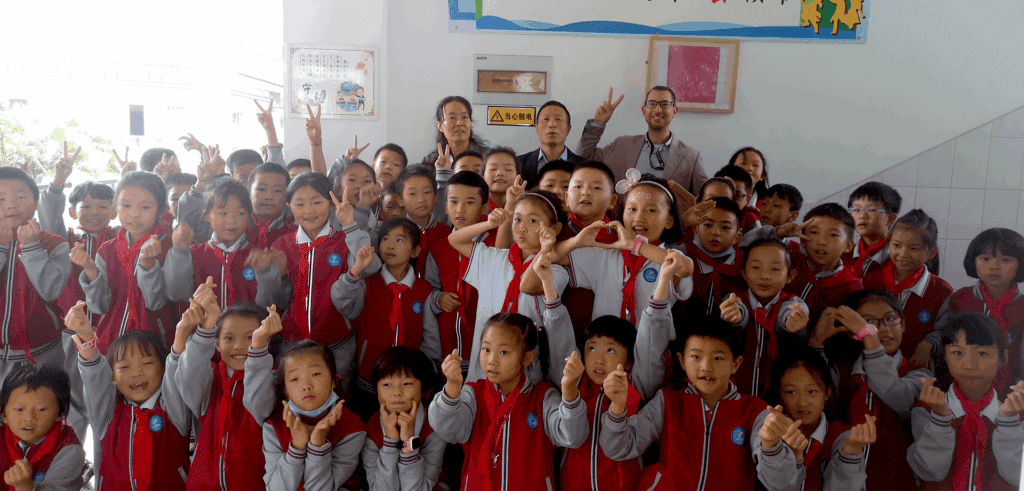
Synthetic Phonics Experts Visiting a Distant Primary School in Yunnan, China

News and Events Past Projects 612
Synthetic Phonics Experts Visiting a Distant Primary School in Yunnan, China (Image 1)

In 2022, GPLRC partnered with a local education charity to deliver an impactful synthetic phonics teacher training and student literacy development programme at a rural primary school in Yunnan Province. This remote school serves a predominantly minority language-speaking community, where English exposure is limited and teaching resources are scarce.


Project Objectives

  • Provide local teachers with comprehensive, evidence-based synthetic phonics training tailored for multilingual learners.
  • Enhance students’ foundational reading skills, including phoneme awareness, decoding, blending, and oral reading fluency.
  • Develop sustainable, low-cost phonics teaching resources adaptable to rural classroom settings.
  • Establish a supportive peer community for teachers to continue professional learning post-project.

Key Project Activities

1. Intensive On-Site Teacher Training

  • Delivered over 5 days, including workshops on:
    • Fundamentals of synthetic phonics and the science of reading.
    • Explicit teaching of grapheme–phoneme correspondences (GPCs).
    • Lesson structuring and pacing strategies for young learners.
    • Differentiation for multilingual classrooms and low-resource environments.
    • Formative assessment methods and student progress monitoring.

2. Live Classroom Demonstrations

  • GPLRC experts conducted phonics lessons in Grades 1–3, modelling best practices.
  • Teachers observed and engaged in reflective discussions immediately following lessons to contextualize learning.

3. Student Engagement through Literacy Corners and Games

  • Set up temporary phonics-focused learning corners using durable, low-cost materials (phoneme mats, word cards, charts).
  • Facilitated interactive phonics games and storytelling sessions with decodable texts to reinforce learning.

4. Resource Creation and Distribution

  • Developed a set of 30 printable decodable readers aligned with the phonics progression.
  • Produced phonics flashcards and lesson plan templates for ongoing use by teachers.
  • Provided digital copies for wider accessibility.

5. Remote Follow-Up Support

  • Over 3 months, GPLRC experts conducted monthly virtual mentoring sessions.
  • Teachers shared classroom videos and lesson reflections to receive personalised feedback.
  • Adapted teaching strategies were suggested to address local classroom challenges.

Impact and Outcomes

Teacher Development

  • 12 teachers completed the programme, reporting 100% increased confidence and competence in synthetic phonics instruction.
  • Observation and self-assessment indicated an average 30% improvement in lesson planning and delivery skills.

Student Literacy Gains

  • Letter–sound recognition improved by 22%.
  • Decoding accuracy increased by 18%, particularly for consonant-vowel-consonant (CVC) words.
  • Oral reading fluency improved by 15%, with students demonstrating greater reading confidence and participation.

Sustainability and Community Building

  • The school officially integrated the GPLRC synthetic phonics scope and sequence into the Grade 1–3 English curriculum.
  • Teachers established an informal peer network for sharing resources and strategies to sustain instructional quality.

GPLRC’s Professional Role

Fostered a professional learning community among teachers to encourage collaboration and continuous improvement.

Delivered expert synthetic phonics training adapted to the linguistic and resource context of a remote minority community.

Employed evidence-based instructional design focused on skill mastery and teacher empowerment.

Provided sustainable teaching materials and ongoing coaching to ensure long-term impact.

Future Prospects

Building on this project’s success, GPLRC plans to:

  • Expand similar phonics training programmes to other remote and multilingual regions.
  • Develop resource toolkits tailored for low-resource schools.
  • Continue virtual mentoring and peer network facilitation to support teacher development.

Last Topic: Next Topic:

Recommendations