 Global Phonics And Literacy Learning And Research Centre
Search the entire website
GPLRC Search Center
Entire WebsiteNews and EventsOur ProjectsOur ReportsOur Trainings
Start Your Search
GPLRC Search Center
In 2018, the Global Phonics & Literacy Research Centre (GPLRC) supported and helped showcase another major cross-cultural educational arts project in China: Zheng He’s Voyages to the Western Ocean, a large-scale English-language performance inspired by one of the most important maritime stories in Chinese history. Drawing on the legendary expeditions of Admiral Zheng He, the production transformed a significant historical narrative into a rich educational and artistic experience for young learners.
The event was designed and led by professional artists from Scotland and performed by students from several international schools across China, creating a vibrant platform for literacy development, intercultural dialogue, and arts-based learning. By combining Chinese historical content with international creative direction and English-language performance, the project offered students a unique opportunity to engage deeply with both language and culture through drama, music, movement, and storytelling.
The project was conceived as far more than a stage performance. It was designed as an immersive literacy and expressive language initiative, using the story of Zheng He’s historic voyages as a meaningful and inspiring context through which students could develop English communication skills in an authentic and memorable way.
Through rehearsals, script work, lyric practice, narration, and ensemble performance, students were encouraged to strengthen their reading fluency, vocabulary understanding, pronunciation, listening, and expressive speaking. The use of a historical Chinese theme also gave the project additional educational significance, allowing students to explore their own cultural heritage while presenting it in English to an international-standard audience.
At its heart, the production aimed to demonstrate how storytelling, performance, and language learning can be brought together to create a powerful form of education—one that is intellectually engaging, emotionally resonant, and highly effective in building student confidence.
The project was guided by several interrelated objectives.
First, it sought to promote English literacy and oral expression through a live performance process, allowing students to practise language in purposeful, collaborative, and highly contextualised ways.
Second, it aimed to bring Chinese history to life for young learners by transforming the story of Zheng He’s voyages into an accessible and inspiring dramatic experience. In doing so, the project enabled students to connect with a major chapter of Chinese civilisation while developing the ability to communicate that story in English.
Third, the programme was designed to build confidence, creativity, and intercultural understanding, as students worked under the guidance of Scottish artists and collaborated with peers from different international school communities across China.
Finally, the project sought to model a form of arts-integrated literacy education in which performance becomes a vehicle for deeper comprehension, clearer pronunciation, stronger memory retention, and more expressive language use.
The production was led by Scottish creative professionals, whose expertise in drama, music, stage performance, and educational arts brought strong artistic structure and international perspective to the programme. Their leadership ensured that the project maintained high creative standards while remaining deeply accessible and educational for participating students.
Students from several international schools in China took part in the production process, engaging in rehearsals that integrated script interpretation, spoken delivery, ensemble work, movement, and musical performance. Throughout the programme, students were challenged not only to memorise lines and perform on stage, but also to understand the historical meaning, emotional tone, and narrative flow of the story they were presenting.
The use of English as the performance language gave students repeated opportunities to practise pronunciation, intonation, pacing, articulation, and expressive reading in a purposeful setting. Rather than learning language in isolation, they experienced English as a living tool for storytelling, collaboration, and artistic communication.
One of the most distinctive features of Zheng He’s Voyages to the Western Ocean was its powerful cross-cultural character. A historic Chinese story was interpreted through a collaborative framework involving Scottish artists and Chinese international school students, creating a meaningful dialogue between cultures, educational traditions, and artistic practices.
This structure helped students appreciate that Chinese stories can be shared confidently on an international stage, and that cultural heritage can be reinterpreted in globally accessible ways without losing its historical depth or identity. The project therefore served not only as a literacy and arts initiative, but also as a model of how international collaboration can enrich cultural education.
Participation in the project supported students in a wide range of areas beyond the final performance itself. Through sustained rehearsal and ensemble practice, students developed stronger public speaking confidence, teamwork, discipline, listening skills, and stage presence. They also improved their ability to interpret text, communicate meaning clearly, and use English with greater confidence and expressiveness.
Teachers and school leaders observed that the performance process created a particularly effective environment for students to grow in both linguistic competence and personal confidence. Because students were working toward a meaningful public outcome, their engagement with the language was purposeful, motivated, and emotionally invested.
Zheng He’s Voyages to the Western Ocean became another notable example of the kind of innovative, culturally grounded, and internationally collaborative educational programming that aligns closely with GPLRC’s broader vision. The project showed how literacy learning can be expanded far beyond conventional classroom boundaries and embedded within artistic, historical, and intercultural experiences that leave a lasting impression on young learners.
By bringing together Scottish artistic leadership, Chinese historical storytelling, and English-language student performance across multiple international schools in China, the project stood as a strong example of how education, creativity, and cultural exchange can work together to produce meaningful and lasting impact.

In 2022, key experts from the Global Phonics & Literacy Research Centre (GPLRC) convened at the renowned Jolly Learning Publishing House in London, a leading international publisher specializing in phonics and literacy educational materials. T...
Details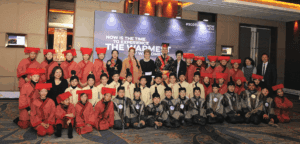
In 2020, GPLRC collaborated with Scottish Opera (SO) to design and deliver a pioneering STEAM teacher training programme in Beijing primary schools. This project uniquely combined arts education, phonics-based literacy dev...
Details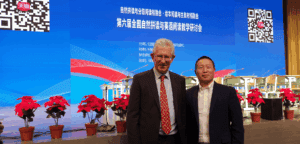
The Phonics & Reading Forum, hosted by Foreign Language Teaching and Research Press (FLTRP) in Beijing, is one of China’s premier annual events dedicated to advancing English language education. The 2020 forum attracted over 500 participants, ...
Details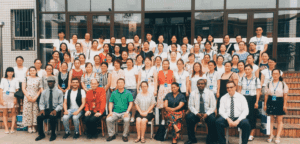
In 2023, the Shanxi Provincial Education Bureau commissioned GPLRC to design and deliver an intensive Phonics Teacher Training Programme aimed at improving foundational English literacy skills across multiple primary schools in Shanxi Province. Th...
Details