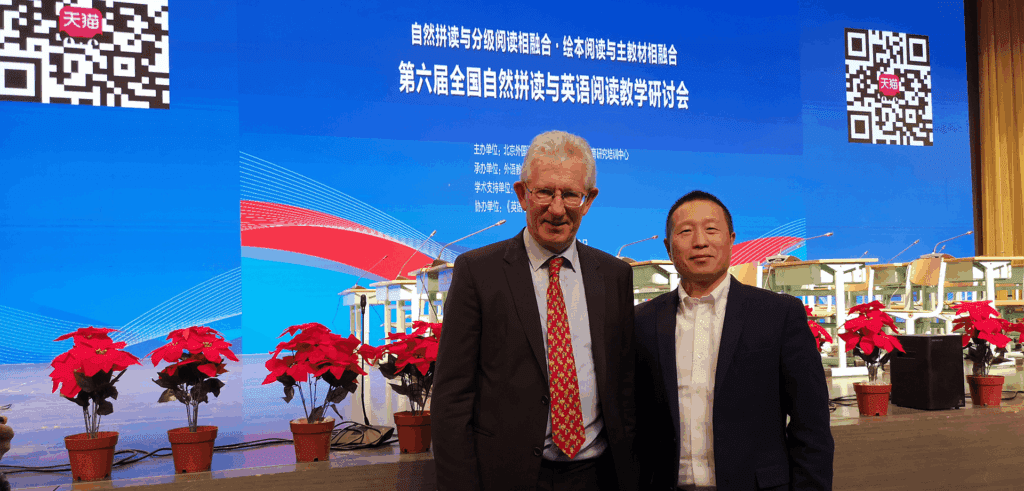
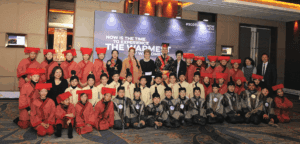
The Phonics & Reading Forum, hosted by Foreign Language Teaching and Research Press (FLTRP) in Beijing, is one of China’s premier annual events dedicated to advancing English language education. The 2020 forum attracted over 500 participants, including primary and secondary English teachers, literacy researchers, curriculum developers, and government education officials from across China.
GPLRC was invited to deliver the keynote addresses in recognition of its leadership in synthetic phonics pedagogy and teacher professional development.
GPLRC’s Keynote Contributions
1. Comprehensive Synthesis of Phonics Science and Practice
GPLRC experts delivered a keynote session titled “The Science of Reading and Synthetic Phonics: Transforming Early English Literacy in China.” The session included:
- Detailed review of cognitive science underpinning phonemic awareness, decoding, and fluent reading, supported by global research findings.
- Explanation of synthetic phonics instructional principles, including the systematic teaching of grapheme–phoneme correspondences (GPCs), blending, segmenting, and multisensory learning strategies.
- Analysis of common phonological challenges faced by Chinese learners, including tone interference, vowel length, and consonant clusters, with practical teaching recommendations.
- Discussion on adapting phonics pedagogy for multilingual and multicultural classrooms typical in China’s diverse regions.
2. Presentation of GPLRC’s Teacher Training Model
- Detailed breakdown of GPLRC’s evidence-based teacher professional development framework:
- Intensive in-person workshops combined with classroom demonstration lessons.
- Micro-teaching practice sessions with peer and expert feedback.
- Extended mentoring and online support for sustained skill development.
- Emphasis on interactive, learner-centered teacher training approaches that promote reflection, collaboration, and ongoing improvement.
- Sharing of real-world case studies from Beijing, Shanxi, and Yunnan projects showcasing teacher skill growth and student literacy gains.
3. Sharing Student Literacy Impact Data
- Presentation of quantitative and qualitative data demonstrating improvements in:
- Letter–sound knowledge and phoneme segmentation accuracy.
- Decoding and blending skills measured via formative assessments.
- Oral reading fluency and comprehension in early grades.
- Video testimonials and classroom footage illustrating increased student engagement and confidence.
4. Resource and Partnership Development
- Overview of GPLRC’s collaborations with FLTRP and regional education bureaus to develop contextually relevant phonics teaching materials.
- Demonstration of how integrated print and digital resources support teacher training scalability and classroom implementation.
- Discussion of emerging partnerships aiming to expand phonics literacy programs nationwide.
Interactive Forum Engagement
Panel Discussions and Q&A
- GPLRC experts participated in thematic panels addressing:
- Overcoming barriers to effective phonics instruction in China.
- Innovations in teacher training delivery leveraging technology.
- Scaling literacy programs while maintaining instructional quality.
- Engaged in dynamic Q&A sessions, providing practical advice to educators on phonics lesson planning, student assessment, and classroom management.
Breakout Workshops
- Led focused workshops for smaller groups of teachers and trainers to:
- Practice phonics teaching activities and multisensory methods.
- Analyze student work samples and assessment data.
- Share best practices and challenges in phonics instruction.
Strategic Impact and Outcomes
Professional Recognition and Influence
- GPLRC’s keynote role solidified its reputation as a national leader in phonics education and teacher development.
- The forum platform amplified GPLRC’s research-based phonics models to a broad, influential audience, including policy makers shaping regional literacy strategies.
Policy and Curriculum Influence
- Insights from GPLRC’s presentations informed updates in provincial curriculum guidelines emphasizing phonics instruction.
- Several participating school districts initiated pilot phonics training programs based on GPLRC’s model.
Partnership and Network Expansion
- Strengthened collaboration with FLTRP, resulting in a joint project to co-develop phonics teacher training modules and instructional materials for nationwide dissemination.
- Established connections with government agencies, NGOs, and academic institutions for future large-scale literacy initiatives.
Participant Testimonials
“GPLRC’s keynote presentations were enlightening and actionable. They connected research directly to classroom practice, which our teachers greatly appreciate.”
— Provincial Education Official, Henan
“The interactive workshops helped me understand how to implement phonics lessons with confidence, even with large classes and limited resources.”
— English Teacher, Guangdong Province
“The data and real-world examples showed us the tangible benefits of structured phonics teaching. We are eager to adopt these approaches.”
— School Principal, Hunan Province
Future Plans and Collaboration
- Launch of blended teacher training programmes combining face-to-face and online modules to reach remote educators.
- Development of digital phonics assessment tools aligned with GPLRC’s teaching frameworks.
- Continued collaboration with FLTRP to produce multilingual phonics materials and teacher guides.
- Organization of follow-up webinars and regional workshops to sustain professional development momentum.
GPLRC’s Professional Role Summary
- Delivered authoritative keynote presentations synthesizing phonics science and practice for a national audience.
- Demonstrated effective teacher training models with proven impact on literacy development.
- Facilitated knowledge exchange and professional networking among educators, researchers, and policy makers.
- Acted as a catalyst for educational innovation and systemic literacy improvement across China.
 Global Phonics And Literacy Learning And Research Centre